
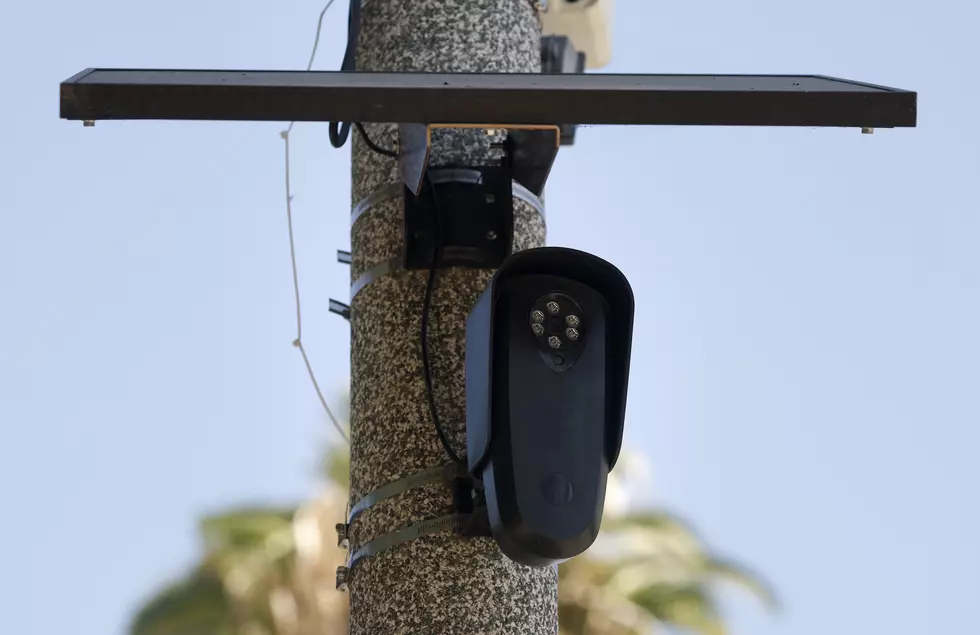
Flock Cameras Are Watching Indiana and Kentucky – Here’s How to See If You’ve Been Searched
Several years ago, when President Obama visited the Tri-State, my co-worker Jaclyn and I were sent to cover his speech. I had a bag with me that held my laptop and some recording equipment. I went in with the media, and when I got to the Secret Service agents, I was about to hand over my backpack for a search. They sent me through without any fuss and told me, "We already know who you are."
At the time I thought, "Well, I had to preregister as media, so they probably did a background check or something," but the more I thought about it, the more it creeped me out. I was within spitting distance of the President of the United States. They don't take chances. They didn't just run a background check. They knew me. And they labeled me as "safe enough that we don't even need to check her stuff."
This was long before widespread Flock cameras, Ring doorbells, and facial recognition cameras. Working at a local radio cluster feels like small potatoes, but when I got an out-of-the-blue personal invitation to the current administration's inauguration, it sealed the deal that the government really does know little old me, and that is kind of unnerving. For the record, I didn't go. I would rather stay out of government business if at all possible.

Every Move We Make Is Tracked and Recorded
Now, if you think you can escape the ever-watching eye, think again. Every move we make is tracked and recorded. I've noticed a feature on my phone that has recorded my patterns, and when I get in the car to go somewhere, it gives me a brief rundown of my upcoming journey, including traffic info, weather, and an ETA.
CREEPY!
Flock cameras have been under a microscope lately.
According to Flock Safety's website, its technology helps solve an average of 2,200+ crimes per week and is being used by more than 5,000 communities.
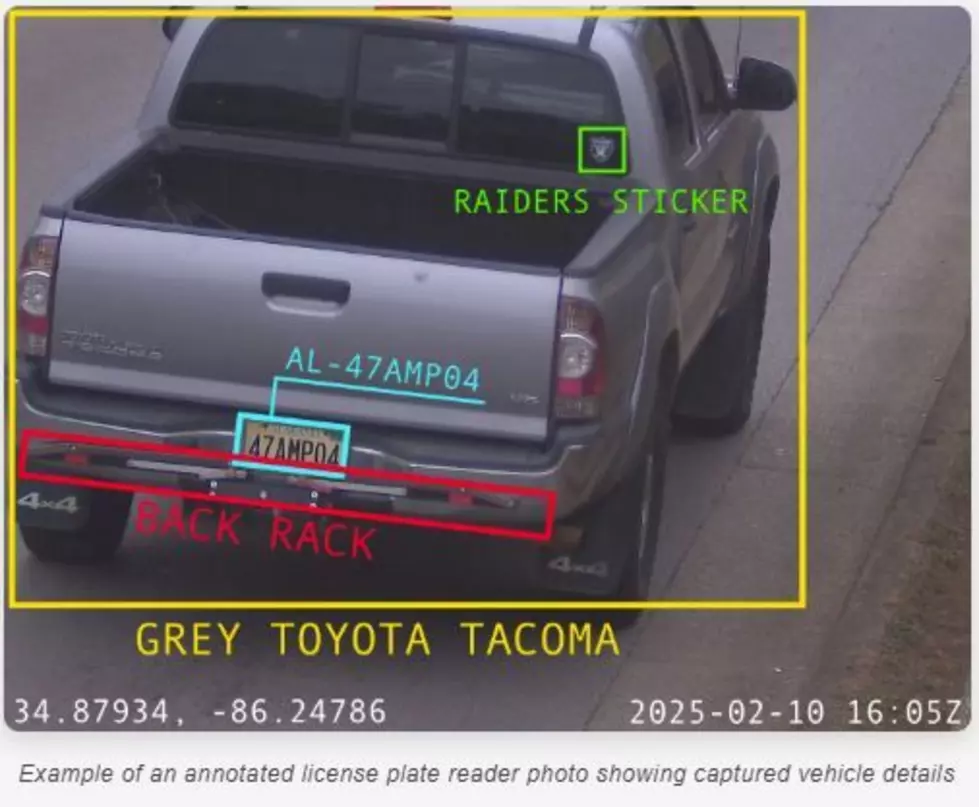
The camera records your license plate, vehicle make, model, and color, as well as the time and location of the detection. These cameras collect data on millions of vehicles regardless of whether the driver is suspected of a crime.
But folks have also been using the software for nefarious reasons. Police officers have been caught tracking the whereabouts of their spouses and domestic partners. Agencies have been caught selling data. It has also been used by Texas law enforcement to track a woman across state lines who had an abortion. And the DeFlock website alleges there are major security flaws that could leave private information vulnerable to hackers, as well as concerns about racial profiling, political protests, and ICE enforcement, though Flock has defended their product.
"Reviews citing concerns (e.g., protest-related searches or inappropriate search terms) reflect isolated instances across thousands of agencies and millions of searches, not evidence of widespread, systemic monitoring or bias built into the technology."
They also claim safeguards are built into the system's architecture.
DeFlock also adds that outside of police and agencies using the information incorrectly, it's downright unconstitutional.
"ALPRs are a serious risk to your privacy and civil liberties. These systems continuously record your movements without a warrant, probable cause, or even reasonable suspicion. Your driving history is rarely confined to the town or city where the cameras are installed. It's typically shared with thousands of other agencies nationwide," says DeFlock, a national organization dedicated to eradicating the camera system. They also offer an interactive map of all the cameras that are watching you.
Some folks are so vehemently against Flock cameras that they've been secretly disabling them, and some communities like Hartford, KY, have decided to end their partnerships with Flock cameras, citing concerns from citizens.
What Do Flock Cameras Cost?
I did a little digging on how much it's costing us to be constantly watched.
According to cost estimates compiled by Have I Been Flocked, which uses data from Flock transparency portals, there are an estimated 257,806 license plate reading cameras in the US.
The site estimates the average cost of a Flock camera at about $6,200 per year.
That puts the estimated nationwide cost at approximately $133.2 million per month, or nearly $1.6 billion per year. The average agency could be spending approximately $242,881 per year on Flock cameras.
Have I Been Flocked also attempts to put the estimated cost into perspective by comparing the cost of the camera with how much crime it helps solve - specifically car theft and AMBER Alerts.
Its estimate puts the cost at approximately $25,365 per car theft incident and approximately $13.1 million per Amber Alert.
It's important to note that these are estimates, not a tally of actual government spending. The website bases the figures on available transparency portal data and an estimated annual cost per camera.
You Can Check If Your License Plate Has Been Searched
Now, you can see if someone has been running your license plate through the Flock system. Just put your license plate number into HaveIBeenFlocked.com, and it tells you if you've been searched in the past seven days.
How Many Flock Cameras Are in the Tri-State?
Here's what we can document locally. You can see an interactive map right here.
Evansville and Vanderburgh County
Eyes Off Indiana reports 117 cameras in Vanderburgh County, with 67 made by Flock Safety. The cameras are operated by EPD and VCSO. That's about 6.5 cameras for every 10,000 residents.
The city of Evansville approved a five-year Flock contract totaling $717,500 in November 2023.
Warrick County
Flock Transparency reports 12 cameras, 263,480 vehicle detections in the last 30 days, and 126 searches in Warrick County. This doesn't include non-Flock cameras.
Owensboro and Daviess County
The Atlas of Surveillance documents 16 Flock ALPRs operated by Owensboro Police as of September 2025.
Henderson, Kentucky
Henderson Police had 15 Flock ALPRs as of September 2025, according to the Atlas of Surveillance. The county Sheriff's Office had 10 Flock ALPRs as of September 2025, plus six Flock Condor cameras with video analytics.
Indiana
According to Eyes Off Indiana, we have a total of 3,537 cameras in he Hoosier State. Not surprising that new black-out license plates were introduced last year to make it easier for readers to accurately read your plate. DeFlock lists the number at 16,042 which includes flock, Genetec, and other cameras.
Kentucky
It's harder to find Kentucky stats. DeFlock states that there 7,525 cameras in site but this doesn't just include Flock license plate readers.

So, How Much Surveillance Is Too Much?
I don't know the answer to that.
I do know that the technology can be incredibly useful when you're trying to find a stolen vehicle, solve a crime or locate someone who may be in danger. But do these things justify the cost to our freedom and our wallets?
I do know that every time one of those cameras captures my vehicle, it doesn't know whether I'm a suspect, a reporter going to work, a mom taking her kid somewhere, or just someone heading home. And we are all being watched, whether we like it or not.
Take Our Poll
10 Movies You Never Knew Were Based on Magazine and Newspaper Articles
Gallery Credit: Emma Stefansky